

Wisdom teeth, or third molars, are the last permanent teeth to come in, usually between the ages of 17 and 21. Knowing how to care for wisdom teeth matters at two very different stages: while they are still in your mouth, and after they have been removed. Each stage needs a different routine.
While they are in place, the challenge is reach. Third molars sit behind the second molars, close to the jaw joint and cheek, and they often come in only partway. After removal, the challenge is protection. The socket has to hold a blood clot long enough for new tissue to form. This guide covers both stages, with practical steps for daily cleaning, the first 24 hours after surgery, preventing dry socket, eating, managing swelling and knowing when to call a dentist.
Key Takeaways
- Wisdom teeth sit at the very back of the mouth, so they need slower, more deliberate brushing and flossing than other teeth.
- A partly erupted wisdom tooth can trap food under a gum flap and lead to a painful infection called pericoronitis.
- After removal, the blood clot in the socket is the key to healing. Avoid straws, smoking, spitting and forceful rinsing in the first few days.
- Swelling usually peaks around day 2 or 3, and most people feel noticeably better within a week.
- Pain that gets worse after day 3, fever, pus or swelling that keeps growing are signs to call a dentist.
How to Clean Wisdom Teeth That Are Still in Place
A fully erupted wisdom tooth that sits upright and has healthy gum around it can be cleaned like any other molar. The difference is access: the toothbrush has to travel further back, the cheek gets in the way, and many people gag when the brush reaches that far. As a result, the back surface of the third molar is one of the most commonly missed spots in the mouth, and plaque left there can lead to decay on both the wisdom tooth and the second molar beside it.
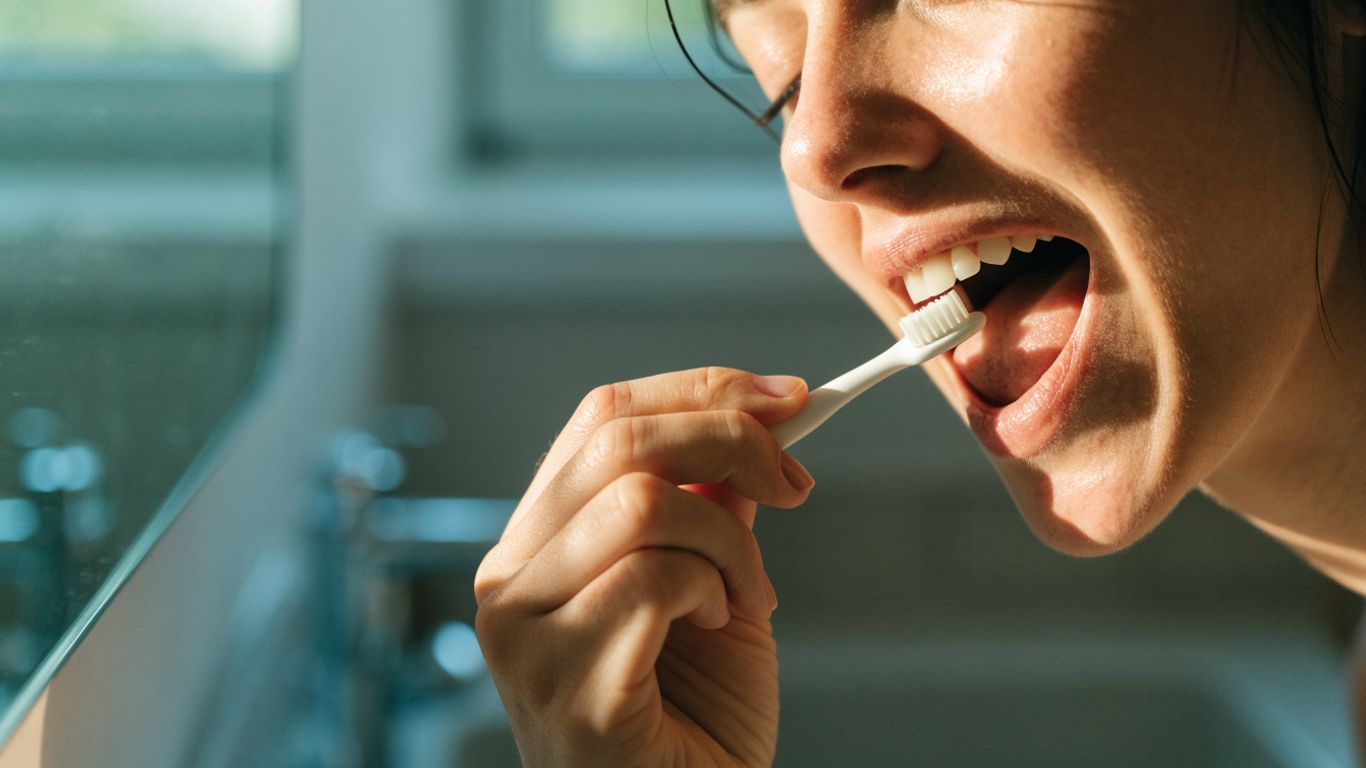
Brushing and Flossing Hard-to-Reach Back Molars
A soft-bristled toothbrush with a small head makes the biggest difference. Open your mouth only partway, since a wide-open mouth tightens the cheek and blocks access. Angle the bristles at 45 degrees toward the gumline and use short, gentle strokes on the cheek side, tongue side and chewing surface. Then turn the brush so the tip reaches the back surface of the last molar.
For cleaning between teeth, regular floss works if it can slide in without forcing it. Floss holders, floss threaders or small interdental brushes are easier to guide behind the second molar. A single-tuft brush, a small brush with one pointed bundle of bristles, is designed for exactly this area and helps clean around a gum flap without poking under it. If floss snags or tears in the same spot every time, mention it at your next checkup, as it can point to a cavity or a rough filling edge.
Caring for Impacted Wisdom Teeth
An impacted wisdom tooth is one that cannot fully come in because it is blocked by bone, gum tissue or the tooth in front of it. Some impacted teeth stay completely under the gum and cause no symptoms. Others break through partway, leaving a flap of gum tissue called an operculum over part of the tooth. Food and bacteria collect under that flap, and the area can become inflamed and infected. This condition is called pericoronitis.
Signs of pericoronitis include tender or swollen gum behind the last molar, pain when biting, a bad taste, bad breath that does not go away with brushing, and in some cases difficulty opening the mouth fully. Home care can keep the area cleaner, but it cannot fix the position of the tooth. While waiting for a dental assessment, these habits help keep the area calm:
- Brush the neighbouring teeth gently with a soft-bristled brush, and use a single-tuft brush along the edge of the gum flap.
- Rinse with warm salt water after meals to flush out trapped food.
- Avoid toothpicks, fingernails or sharp objects under the gum flap.
- Chew on the other side until the area settles.
A dentist will use an X-ray to see the angle of the tooth, how deep it sits and how close it is to nearby roots and nerves. Based on that, the tooth may simply be monitored at regular checkups, or wisdom tooth removal may be recommended. According to the Ontario Dental Association, a dentist may refer more complex cases to an oral and maxillofacial surgeon. If the gum around your back molars bleeds or stays inflamed, non-surgical gum therapy may also be part of the plan.
Wisdom Teeth Aftercare: The First 24 Hours
The first day after removal sets up the rest of recovery. The local anaesthetic usually wears off within a few hours, and some bleeding, oozing and soreness are expected. Plan to rest for the day, keep your head raised on an extra pillow, and avoid bending, lifting or exercise. If you were given written instructions after the procedure, keep them nearby and follow them over any general advice, since they are based on how your extraction went.
Controlling Bleeding with Gauze
Place a folded piece of gauze directly over the socket and bite down with firm, steady pressure for about 30 minutes, or for as long as you were told. The pressure helps a clot form, so resist the urge to keep lifting the gauze to check. If oozing continues, replace it with a fresh piece and repeat.
A little blood mixed with saliva can look like a lot more than it is, and light pink saliva for the first day is normal. If bleeding stays heavy after a few rounds of pressure, a damp black tea bag held on the site can help, as the tannins in tea support clotting. Bleeding that soaks through gauze quickly and does not slow down is a reason to call the dental office.
Protecting the Blood Clot
The blood clot that forms in the socket acts as a natural bandage. It covers the exposed bone and nerve endings and gives new tissue a frame to grow on. For the first 24 hours, avoid anything that could dislodge it:
- No spitting, rinsing or swishing.
- No drinking through a straw, as the suction can pull the clot out.
- No smoking or vaping.
- No touching the socket with your tongue or fingers.
- No hot drinks or hot food until the numbness wears off.
After the first 24 hours, gentle warm salt water rinses can begin. Let the water roll around the mouth and fall out over the sink rather than spitting it out forcefully.
How to Prevent Dry Socket
Dry socket, known clinically as alveolar osteitis, happens when the blood clot breaks down or comes out of the socket before the area has healed. Without that cover, the bone underneath is exposed. It typically shows up 2 to 4 days after the extraction, often just when the pain should be easing. The signs are a strong, throbbing pain that can spread to the ear or temple on the same side, a socket that looks empty or greyish instead of dark red, and a bad taste or smell.

Lower wisdom teeth are more prone to dry socket than upper ones. The risk is also higher for people who smoke, people who have had dry socket before and cases where the extraction was more difficult. No routine can rule it out completely, but these steps lower the risk:
- Avoid smoking and vaping for as long as possible after surgery, ideally at least the first few days.
- Do not use straws, and do not spit forcefully during the first week.
- Keep the rest of the mouth clean so bacteria do not build up near the socket.
- Start salt water rinses only after 24 hours, and keep them gentle.
- Stick to soft foods that will not lodge in the socket.
Dry socket will not get better with home remedies, and over-the-counter pain relievers often do not control it. A dentist can clean the socket and place a medicated dressing, which usually brings relief quickly. If pain starts climbing again around day 3 or 4, call rather than waiting it out.
Managing Wisdom Teeth Swelling and Pain
Wisdom teeth swelling is a normal part of the body’s healing response. It usually builds over the first 48 to 72 hours, peaks around day 2 or 3, and then starts to go down. Bruising on the cheek or jaw is also possible, especially after a lower extraction. What matters most is the direction: symptoms that improve a little each day after day 3 are on track, while swelling or pain that keeps increasing is not.
Using Cold and Warm Compresses
For the first 24 to 48 hours, hold a cold pack wrapped in a thin towel against the outside of the cheek for about 15 to 20 minutes, then take a break of the same length. Cold narrows the blood vessels and helps limit swelling. Never put ice directly on the skin.
After about 48 hours, switching to a warm, moist compress can ease jaw stiffness and help swelling go down. Keep it warm, not hot. If warmth makes the area throb more, go back to cold and mention it to your dental office.
Wisdom Tooth Pain Relief Options
Most discomfort after wisdom tooth removal can be managed with over-the-counter medicine. Choosing Wisely Canada notes that post-surgical dental pain can usually be controlled without opioids, using anti-inflammatory medicine such as ibuprofen together with non-opioid pain relievers such as acetaminophen. Ask your dentist or pharmacist which option and dose is right for you, especially if you have a medical condition or take other medicines. If you were given a prescription, take it exactly as directed.
| Approach | How it helps | Keep in mind |
|---|---|---|
| Anti-inflammatory medicine (such as ibuprofen) | Reduces pain and swelling | Confirm it is safe for you with a dentist or pharmacist |
| Non-opioid pain reliever (such as acetaminophen) | Eases pain | Follow the label or your dentist’s directions |
| Cold compress | Limits swelling in the first 48 hours | Wrap it, and use it in 15–20 minute intervals |
| Rest with head raised | Reduces throbbing and swelling | Use an extra pillow for the first few nights |
Never place aspirin or a crushed tablet directly on the gum, as it can burn the tissue. If medicine is not controlling the pain, call the office rather than taking more than directed.
What to Eat After Wisdom Teeth Removal
What you eat after wisdom teeth removal affects both comfort and healing. The goal for the first few days is food that needs little or no chewing, will not leave small pieces in the socket, and is cool or lukewarm. Eating regular, nourishing meals also matters, since healing tissue needs protein and fluids. Most people can move from soft foods back to their usual diet gradually over about a week, depending on comfort.
Soft Foods for the First Few Days
Chew on the side away from the extraction site, take small bites and eat slowly.
| Food | Why it works | Serving tip |
|---|---|---|
| Yogurt or pudding | Smooth, cool and needs no chewing | Choose varieties without seeds or granola |
| Smoothies | Easy way to get protein and fruit | Eat with a spoon, never a straw |
| Mashed potatoes | Soft and filling | Let them cool to lukewarm |
| Scrambled eggs | Soft and high in protein | Cook them soft, not crispy |
| Blended soups | Easy to take in small spoonfuls | Serve lukewarm, not hot |
| Oatmeal or cream of wheat | Soft when fully cooked | Wait until day 2 or 3, and serve lukewarm |
Foods and Drinks to Avoid
For the first week, skip foods that are hard, crunchy, chewy or likely to crumble into the socket, such as chips, nuts, popcorn, crusty bread, rice and foods with small seeds. Spicy and acidic foods can sting the healing tissue, and very hot food or drinks can increase bleeding in the first day.
Avoid alcohol for at least the first few days and for as long as you are taking prescription pain medicine. Carbonated drinks are best avoided early on, and any drink should be sipped from a cup rather than through a straw.
Wisdom Teeth Recovery Time: What to Expect
Wisdom teeth recovery time depends on how many teeth were removed, whether they were impacted and how your body heals. Most people feel noticeably better within 3 to 5 days and return to normal routines within about a week. The gum over the socket takes a few weeks to close, and the bone underneath continues to fill in over the following months. This timeline shows a typical recovery:
| Timeframe | What is typical | What to do |
|---|---|---|
| Day 1 | Bleeding and oozing that slows; numbness wearing off | Gauze pressure, rest, cold compresses, no rinsing or straws |
| Days 2–3 | Swelling and stiffness peak; possible bruising | Continue cold compresses, soft foods, gentle salt water rinses |
| Days 4–7 | Swelling and pain steadily ease | Switch to warm compresses, gradually add softer solid foods |
| Weeks 2–4 | Gum closes over the socket; tenderness fades | Return to normal diet; keep the area clean |
| Months 1–3+ | Bone fills in under the gum | No special care; routine checkups |
If pain is getting worse instead of better after day 3, recovery is off track and the socket should be checked.
Wisdom Tooth Recovery Tips for Faster Healing
The body heals at its own pace, but good habits help avoid setbacks such as infection or dry socket. These wisdom tooth recovery tips make the biggest difference:
- Keep the rest of your mouth clean. Brush the other teeth normally from the first night, and brush gently near the socket once it is comfortable, usually after a day or two.
- Rinse after meals. From day 2, gentle salt water rinses after eating help keep food out of the socket.
- Stay hydrated. Drink plenty of water from a cup.
- Sleep with your head raised for the first two or three nights to limit swelling.
- Ease back into activity. Skip the gym and heavy lifting for at least the first few days, as raised blood pressure can restart bleeding.
- Stay smoke-free as long as possible.
- Keep your follow-up appointment, even if you feel fine, so the dentist can confirm the socket is healing well.
If you were given an irrigation syringe, start using it only when instructed, usually several days after surgery, to flush food from lower sockets.
When to See a Dentist for Wisdom Tooth Pain
Some soreness is expected, whether a wisdom tooth is coming in or healing after removal. Certain symptoms, though, need a professional look. Contact a dentist if you notice any of the following:
- Pain that gets worse after day 3 instead of better
- Swelling that keeps increasing after the third day
- Fever, chills or feeling generally unwell
- Pus, an ongoing bad taste or a bad smell from the socket
- Bleeding that does not slow after repeated gauze pressure
- Numbness of the lip, chin or tongue that lasts after the anaesthetic should have worn off
- Repeated pain, swelling or gum infection around a wisdom tooth that has not been removed
Difficulty breathing or swallowing, or swelling that spreads toward the eye or neck, needs emergency care right away. When calling, describe when the symptom started, whether it is getting better or worse, and any medicines you have taken. That helps the team decide how soon you need to be seen.
Wisdom Tooth Care at RiverEdge Dental in Bradford, Keswick & Orangeville
Whether a wisdom tooth is coming in, causing pain or needs to come out, a dental exam and X-ray show what is going on and what the options are. RiverEdge Dental has clinics in Bradford, Keswick and Orangeville, offering assessments for wisdom teeth, treatment for gum infection around partly erupted teeth and tooth extractions when removal is the best option. New patients are welcome, and you can request an appointment online at the location closest to you.
Coverage Through the Canadian Dental Care Plan
The Canadian Dental Care Plan (CDCP) helps eligible Canadian residents without dental insurance pay for a portion of many oral health services, including oral surgery such as extractions. Some services need preauthorization before treatment. To find out how the plan works with your care, see the Canadian Dental Care Plan page and ask about any costs not covered before treatment begins.
Frequently Asked Questions
How long does it take to recover from wisdom teeth removal?
Most people feel noticeably better within 3 to 5 days and are back to normal routines within about a week. Swelling usually peaks on day 2 or 3. The gum over the socket closes over a few weeks, while the bone underneath keeps filling in for several months. Impacted teeth or removing several teeth at once can lengthen recovery.
Can you brush your teeth after wisdom teeth removal?
Yes. You can brush your other teeth the night of surgery, but avoid the extraction site and do not spit forcefully; let the toothpaste fall out over the sink instead. After a day or two, brush gently near the socket with a soft-bristled brush. Keeping the rest of the mouth clean lowers the risk of infection.
How do I know if I have dry socket?
Dry socket usually appears 2 to 4 days after extraction. The main sign is pain that gets stronger instead of easing, often throbbing and spreading toward the ear. The socket may look empty or show whitish bone instead of a dark clot, and there may be a bad taste or smell. A dentist can confirm it and place a medicated dressing for relief.
Is it normal for wisdom teeth to hurt when they come in?
Mild pressure or tenderness while a wisdom tooth breaks through the gum is common and often comes and goes. Pain that is sharp, constant or paired with swollen gum, a bad taste or trouble opening the mouth may mean the tooth is impacted or the gum around it is infected. In that case, a dental exam with an X-ray is the next step.
Do all wisdom teeth need to be removed?
No. Wisdom teeth that are fully erupted, sit in a good position, have healthy gum around them and can be cleaned properly can often stay. Removal is usually considered when a tooth is impacted, causes repeated infection, damages the neighbouring molar, develops decay that cannot be repaired or is linked to a cyst. Regular checkups and X-rays help a dentist track how wisdom teeth are developing.